Murder of Gerald Wade
The Seven Dials MysteryGerald Wade’s murder was a carefully disguised poisoning committed by Jimmy Thesiger to prevent Wade from identifying him as the criminal he was pursuing. The apparent Chloral overdose turned a deliberate killing into a plausible domestic tragedy, but the unfinished letter and the suspicions of Ronald Devereux eventually reopened the case and connected Wade’s death to the Seven Dials.
Background and Suspicion
Before his death, Wade had become excited by something he had discovered and believed he was close to confirming that he was on the right track. He kept his conclusion to himself, but told Ronald Devereux that he was nearly certain. The two men then went to Chimneys for a weekend, where Wade died. In retrospect, his progress matters: the investigation was not simply an abstract pursuit of a thief, but a trail that had brought him close to the person responsible.
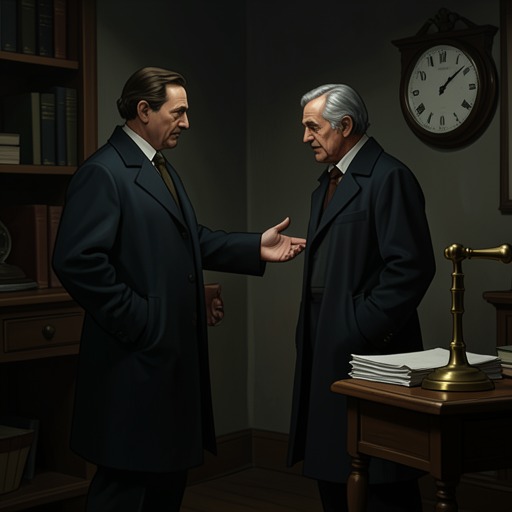
Devereux did not accept the apparent explanation of an overdose. He believed Wade had been deliberately removed and that the criminal must be someone in the house. Although he came close to confiding in Jimmy Thesiger, he did not suspect his friend at the time and held back. That intimacy made the deception especially effective: Thesiger was near enough to Wade and Devereux to hear what they knew, while remaining beyond their suspicion.
The Poisoning and Its Concealment
Thesiger gave Wade the fatal dose in whisky and soda that Wade drank downstairs before going to bed. The poison had already begun to make him sleepy when he wrote an unfinished letter to Loraine Wade. The letter’s incompleteness therefore records the effect of the poisoning in progress, even though it did not initially make the method plain.
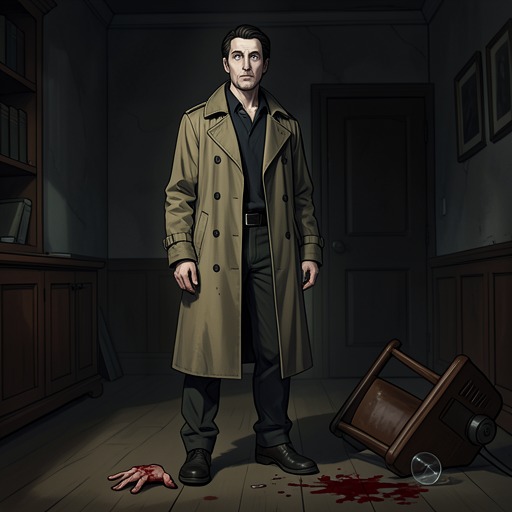
After the household had fallen asleep, Thesiger placed a bottle, a glass, and an empty Chloral bottle beside Wade’s bed. Wade was unconscious by then; Thesiger pressed his fingers around the glass and bottle so that the objects would appear to support the impression that he had taken the drug himself. The scene was arranged to convert a killing into the familiar signs of an overdose. The doctor’s early assessment—that the facts suggested an excessive dose of Chloral, with the substance, bottle, and glass beside the bed—shows how convincing that staging was. The doctor also reported that Wade had not been known to complain of sleeplessness, a detail that sits uneasily beside the apparent need for a sleeping draught, though it did not by itself undo the first explanation.
The Clocks and the Trail to Thesiger
After Wade’s death, Devereux set seven clocks on a mantelpiece and discarded the eighth. The arrangement was meant as a sign that the Seven Dials would avenge the death of one of its members. Devereux watched the people around him for any betraying reaction. The gesture turned grief and suspicion into a test: whoever recognized the threat, or feared what the clocks implied, might disclose what they knew. Thesiger did not openly reveal himself, though the later account suggests that the display troubled him and that he watched Devereux warily.
Devereux eventually followed the same line of inquiry Wade had pursued and reached the same conclusion: Thesiger was the criminal. His last words were first liable to be understood as a message that the Seven Dials had killed him. Their meaning was otherwise: he wanted the Seven Dials told something about Thesiger. In this way the two deaths became linked by the information each man had approached, and by Thesiger’s effort to keep his identity concealed.
Consequences and Significance
The murder’s immediate success depended on the ordinary appearance of its evidence. A sleeping draught, a bottle, and a glass seemed to explain Wade’s death, while the poisoned drink and the deliberate placement of those objects remained hidden. The distinction between the visible bedside scene and the actual sequence of events is central to the eventual reconstruction: Thesiger did not merely poison Wade but prepared the room to make the poisoning look self-inflicted.
Wade’s unfinished letter, Devereux’s refusal to accept the overdose explanation, and the seven-clock warning each preserve a different part of the truth. None alone provides the whole account; together they show how close Wade had come to exposing Thesiger, why Devereux continued the inquiry, and how the apparent overdose concealed a murder within the circle of people investigating the crime.